The Great Apple Folding Phone Leak: Everything We Know (And Why You Should Care)
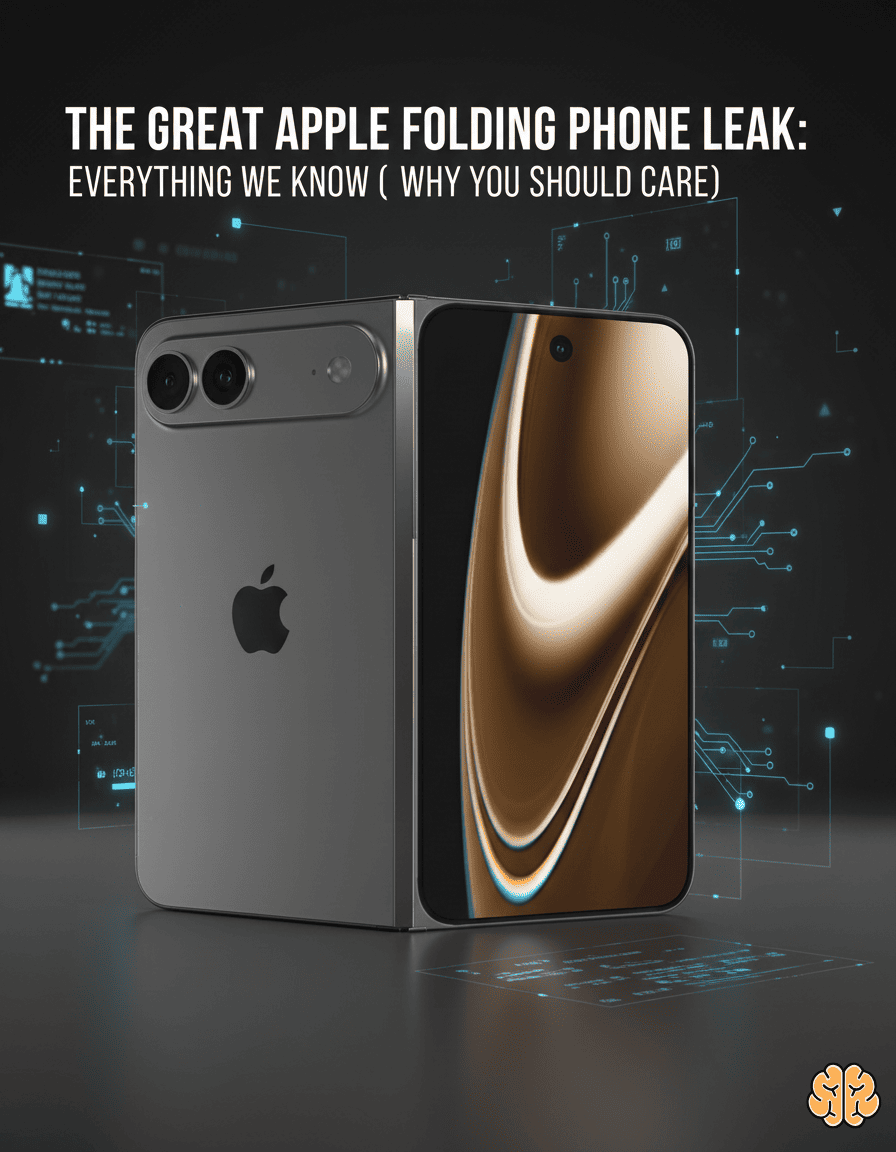
Description: Apple folding phone leaks reveal exciting details about Apple's foldable iPhone plans. Get the latest rumors, specs, and release date predictions for this game-changing device.
So, Apple's finally doing it. Maybe. Probably. Okay, fine—we don't know for sure. But the leaks? They're getting too juicy to ignore.
I'll be honest with you: I've been burned by Apple rumors before. Remember when the iPhone was definitely getting a fingerprint scanner under the screen? Or when AirPower was totally coming back? Yeah. Apple has a way of keeping secrets that would make the CIA jealous, and they're equally skilled at letting strategic "leaks" slip when it serves their purposes.
But here's the thing about the recent Apple folding phone leaks—they feel different. More substantial. More... real.
Let me take you down the rabbit hole of what we're hearing, what it means, and whether you should actually get excited or just grab some popcorn and watch Samsung users be the guinea pigs one more time.
What Exactly Is Leaking About Apple's Foldable Phone?
First, let's get our terminology straight. We're not talking about a flip phone here (though Apple could go that route too). The leaks suggest Apple is working on multiple foldable concepts, but the main buzz centers around a device that unfolds into a tablet-sized screen.
Think iPad mini that fits in your pocket. Think iPhone that becomes a workspace. Think "holy crap, I can actually multitask on my phone without wanting to throw it against a wall."
Here's what the leaks are telling us:
The Display Technology
Multiple sources—including the usually reliable Display Supply Chain Consultants—suggest Apple is testing foldable OLED panels from Samsung Display and LG Display. Yes, the irony of Samsung potentially supplying displays for Apple's foldable phone isn't lost on anyone.
The screen size? Rumors point to something around 7.5 to 8 inches when fully unfolded. That's bigger than the iPhone 14 Pro Max (6.7 inches) but smaller than the iPad mini (8.3 inches). The sweet spot, if you ask me.
But here's where it gets interesting: Apple isn't just slapping a foldable screen on an iPhone and calling it a day. Leaks suggest they're working on eliminating the crease that plagues current foldables. You know, that annoying line down the middle of your Galaxy Fold that makes it look like your phone has a permanent wrinkle?
Apple's reportedly developing a hinge mechanism that reduces stress on the display, potentially using a "water drop" hinge design that creates a teardrop shape when folded, distributing pressure more evenly.
The Durability Question
One leak from a Korean publication claims Apple has been testing folding displays that can withstand over 100,000 folds. That's roughly 274 folds per day for a year, or 137 folds daily for two years.
For context, Samsung's Galaxy Z Fold series is rated for about 200,000 folds. So if this leak is accurate, Apple's aiming for industry-standard durability, not exceeding it. Very Apple—match the competition on specs, exceed them on execution.
The Price Point (Brace Yourself)
Here's where things get spicy. Analyst Ming-Chi Kuo—who has a pretty solid track record with Apple predictions—suggests a foldable iPhone could launch at around $2,500.
Yes, you read that right. Two thousand five hundred dollars. For a phone.
Before you spit out your coffee, remember: the Galaxy Z Fold 5 launched at $1,800, and the Huawei Mate X3 costs around $2,000. Apple's never been about affordability. They're about convincing you that premium is worth it.
The Release Timeline
This is where things get frustratingly vague. Different sources are throwing out different dates:
- The optimists say late 2025
- The realists point to 2026
- The pessimists (or maybe just the honest ones) suggest 2027 or later
- Apple's official statement: crickets
My gut? 2026 at the earliest. Apple doesn't rush. They watch, they learn from competitors' mistakes, and they launch when they're damn good and ready.
Why Apple's Taking Forever (And Why That's Actually Smart)
Let's talk about why Apple isn't already selling foldables when Samsung's on their fifth generation.
Apple doesn't do "first." They do "best."
Remember, Apple didn't invent the smartphone (RIP Blackberry), the tablet (hello, Microsoft Surface), or even the smartwatch (Pebble, anyone?). They perfected them.
Samsung's folding phones have issues. Real ones. The screens scratch easier than regular phones. The crease is visible and tactile. The durability is questionable. Apps don't always work properly on the larger screen. Battery life takes a hit.
Apple's watching all of this. Taking notes. Figuring out solutions.
Here's what Apple is likely solving before launch:
The Software Experience
This is huge. Having a foldable screen means nothing if your apps don't know what to do with it. Android apps still struggle with proper optimization for foldables, years after launch.
Apple has the advantage of controlling both hardware and software. iOS would need to seamlessly transition apps between folded and unfolded states. Imagine reading an article on your folded phone, then unfolding it to see the full webpage in tablet mode—instantly, smoothly, perfectly.
That's the Apple magic everyone expects, and it takes time to build.
The Durability Standards
Apple users expect their devices to last. The average iPhone owner keeps their phone for about 3-4 years. A foldable phone that develops screen issues after 18 months? That's a PR nightmare Apple won't risk.
They're likely testing materials, hinges, and protective coatings until they can confidently say this thing will last as long as a regular iPhone.
The Crease Problem
Every current foldable has a visible crease. It's the dirty little secret manufacturers gloss over in their marketing. You can see it. You can feel it. And once you notice it, you can't un-notice it.
Apple's obsession with design means they're probably not launching until that crease is minimized or eliminated. They'd rather be late than compromise.
The Price Justification
Apple needs to convince people that a $2,500 phone makes sense. That means the experience has to be so compelling, so different, so valuable that the price feels justified.
They need use cases beyond "it folds, neat!" They need enterprise applications, creative tools, productivity features that make professionals say "I need this" rather than "that's cool but unnecessary."
What the Leaks Tell Us About Apple's Strategy
Reading between the lines of these leaks reveals Apple's likely approach:
They're Going Premium (Obviously)
This won't be an "affordable" foldable. Apple's positioning this as the ultimate iPhone—the flagship's flagship. Think iPhone Pro Max, but foldable. And pricier.
They're Prioritizing Tablets Over Flip Phones
While Samsung offers both the Galaxy Z Fold (tablet-style) and Z Flip (clamshell), leaks suggest Apple's focusing on the tablet-style format first. This makes sense—it's more differentiated from the regular iPhone and offers more compelling use cases for Apple's professional user base.
They're Betting on Ecosystem Lock-In
A foldable iPhone that works seamlessly with your MacBook, iPad, Apple Watch, and AirPods? That's the dream. Apple's likely building features that make the foldable iPhone the ultimate hub for their ecosystem.
Imagine starting an email on your folded iPhone, unfolding it to add attachments and format properly, then seamlessly continuing on your Mac when you get home. That's the kind of integration Apple does better than anyone.
The Competition Apple's Actually Worried About
Let's be real: Samsung isn't Apple's only concern here.
Samsung Galaxy Z Fold Series: Currently the market leader in foldable phones. On their fifth generation, they've worked out many early issues. But they still have the crease, durability questions, and Android's app optimization challenges.
Google Pixel Fold: Google's first foldable launched in 2023. It's more compact than Samsung's offering and integrates tightly with Google's AI features. The software optimization is better than Samsung's, but it's still early days.
Huawei Mate X Series: Popular in China, these devices show impressive engineering but lack Google services, limiting their global appeal.
OnePlus, Xiaomi, Oppo: Chinese manufacturers are flooding the market with foldables at various price points. They're innovating fast and aren't afraid to experiment.
The real threat? By the time Apple launches, foldables might not be novel anymore. They'll be expected. Apple needs to offer something significantly better to justify arriving late to the party.
What I Actually Think Is Happening (The Honest Take)
Here's my read on the situation, cutting through the hype and leaks:
Apple is definitely working on a foldable iPhone. That's not speculation anymore—too many reliable sources have confirmed it. The question isn't "if" but "when" and "what will it look like."
But they're not rushing. Apple's probably watching Samsung's fifth-generation Fold and thinking "getting closer, but not there yet." They're waiting for display technology to mature, for manufacturing costs to decrease, and for consumer interest to solidify.
The 2026 timeline feels right. It gives Apple time to perfect the experience, see how competitors fare in 2024-2025, and gauge market readiness. Plus, it aligns with Apple's typical product development cycles.
The price will be astronomical initially. Think $2,500-$3,000 for the first generation. Apple will market it as a luxury device for power users, creatives, and executives. The "affordable" version (if it ever comes) won't arrive until generation two or three.
The features will justify the price. Apple doesn't launch expensive products without compelling value propositions. Expect:
- Desktop-class Safari browsing
- Advanced multitasking with multiple apps
- Professional creative tools optimized for the larger screen
- Enhanced FaceTime and video conferencing
- Possibly a built-in Apple Pencil slot
- Seamless ecosystem integration
Should You Actually Care About These Leaks?
Real talk: it depends on who you are.
You should care if:
- You're a tech enthusiast who follows Apple religiously
- You use your phone for serious productivity and multitasking
- You're already considering foldables and want to wait for Apple's version
- You invest in Apple stock and want to understand their product roadmap
- You work in design, development, or creative fields where screen real estate matters
You probably don't need to care if:
- You're happy with your current iPhone and don't need more screen space
- You're not willing to pay $2,500+ for a phone
- You prefer to be a late adopter who buys proven technology
- You're skeptical of first-generation Apple products
- You just need a phone for calls, texts, and social media
Honestly? Most people fall into the second category. And that's fine. The first-generation Apple foldable will be for early adopters with deep pockets and a high tolerance for potential issues.
The Leaks I'm Actually Watching For
Here's what would make me take these rumors from "interesting" to "holy crap, this is happening":
Confirmation of suppliers: When Apple signs contracts with display manufacturers, that's usually when things get real. Watch for news about Samsung Display or LG Display securing major orders.
Patent filings: Apple files patents constantly, but specific ones related to foldable hinges, display coatings, or protective mechanisms would be telling.
Supply chain movements: When factories start ramping up production of foldable-specific components, leakers catch wind. This usually happens 6-8 months before launch.
iOS updates with foldable hints: Developers often find code in iOS betas hinting at upcoming hardware. References to foldable displays or dual-screen modes would be a massive tell.
Executive comments: Tim Cook has been asked about foldables in interviews. Pay attention to how he responds. Apple executives are careful with their words, but they leave breadcrumbs.
What This Means for the Smartphone Market
If—when—Apple launches a foldable iPhone, the ripple effects will be massive:
Legitimization of the category: When Apple enters a product category, it signals mainstream readiness. Remember how smartwatches were niche until the Apple Watch?
Price floor establishment: If Apple launches at $2,500, that gives Samsung room to keep premium pricing on their Folds. It legitimizes the price point.
App developer focus: When Apple enters foldables, millions of iOS developers will optimize their apps for foldable screens. This creates a better software ecosystem that Android foldables could also benefit from.
Competition intensification: Samsung, Google, and Chinese manufacturers will up their game knowing Apple's coming. Expect better features, lower prices, and more innovation.
Accessory ecosystem boom: Cases, screen protectors, stands, keyboards—the accessory market for Apple's foldable will explode.
The Elephant in the Room: Do We Even Need Foldable Phones?
Let me play devil's advocate for a second.
Current smartphones are pretty great. The iPhone 15 Pro Max has a gorgeous 6.7-inch screen, amazing cameras, and does basically everything most people need. Do we really need phones that fold?
The case against foldables:
- Regular phones are thinner and lighter
- No moving parts means fewer failure points
- No crease to worry about
- Significantly cheaper
- Easier to protect with cases
- Better battery life (no power-hungry large screen)
The case for foldables:
- Tablet experience in a pocket
- True multitasking capabilities
- Better for content consumption
- More productive workflows
- Novel form factor that actually adds value
- Future-forward technology
Honestly? For most people, regular phones are probably enough. But for specific use cases—designers showing portfolios, executives reviewing documents, creatives sketching ideas, travelers watching movies—a foldable makes sense.
Apple doesn't need to convince everyone. They just need to convince enough people.
My Prediction: What Apple Will Actually Launch
Okay, putting my reputation on the line here. Based on the leaks, industry trends, and Apple's historical behavior, here's what I think we'll see:
Product: iPhone Fold Pro (or possibly iPhone Ultra Fold)
Launch Date: September 2026
Price: $2,499 for 256GB, $2,699 for 512GB, $2,999 for 1TB
Display: 8-inch OLED when unfolded, 6.5-inch cover display
Special Features:
- Near-invisible crease using proprietary hinge technology
- Apple Pencil support on the unfolded screen
- Desktop-class Safari with proper tab management
- Advanced multitasking with drag-and-drop between apps
- 200,000+ fold rating
- Ceramic Shield on both displays
- Improved durability over competitors
What they won't have (first generation):
- Under-display Face ID (too difficult on foldable screens)
- Always-on display (battery concerns)
- USB-C charging speeds faster than iPhone 15 Pro
- Reverse wireless charging
The marketing pitch: "The most advanced iPhone ever created. Desktop power. Pocket size."
How to Actually Prepare (If You're Interested)
If you're genuinely considering an Apple foldable when it launches, here's what you should do now:
Start Saving
At $2,500+, this isn't an impulse purchase. Put aside $100-200 monthly starting now. By 2026, you'll have the budget ready without financial stress.
Watch Samsung's Current Foldables
Try a Galaxy Z Fold 5 or Pixel Fold in a store. Get familiar with the form factor. See if the concept actually appeals to you or if it's just hype.
Evaluate Your Actual Needs
Ask yourself: "What would I actually do with a foldable screen that I can't do on my current phone?" If you can't answer with specific use cases, you probably don't need one.
Wait for Reviews
Apple's first generation of any product usually has quirks. The first iPhone didn't have an App Store. The first Apple Watch was slow. The first AirPods had connectivity issues.
Unless you're a hardcore early adopter, wait for the second generation in 2027 or 2028.
Consider AppleCare+
If you do buy one, AppleCare+ will be essential. Folding screens are expensive to repair. Budget an extra $300-400 for extended warranty coverage.
The Leaks That Turned Out to Be Wrong (A Reality Check)
Before we get too excited, let's remember Apple leaks that were totally wrong:
- AirPower: Announced, never shipped
- iPhone SE Plus: Rumored for years, still doesn't exist
- Apple Car: Been "coming soon" since 2015
- Touchscreen MacBooks: Constantly rumored, never happening
- Portless iPhone: Supposed to launch in 2021, still has ports
The point? Take every leak with a massive grain of salt. Apple is notoriously secretive and deliberately misleads leakers sometimes.
Until Tim Cook walks on stage and says "One more thing... the iPhone Fold," nothing is confirmed.
What We're Really Waiting For
Here's what I'm personally watching for:
Real photos or videos: Not renders. Not concept art. Actual leaked images from the supply chain or prototype units.
Analyst consensus: When multiple respected analysts (Ming-Chi Kuo, Mark Gurman, Ross Young) all agree on specifics, that's when I pay attention.
Component leaks: Photos of the actual hinge mechanism, displays, or internal components being manufactured.
iOS code references: Developers finding concrete evidence in iOS betas.
Apple's testing programs: Reports of Apple employees testing foldables in the wild (like happened before Apple Watch launch).
Until then, we're in speculation territory. Educated speculation, sure. But speculation nonetheless.
The Bottom Line: Should You Believe the Hype?
Here's my honest assessment: Yes, Apple is working on a foldable iPhone. No, you shouldn't hold your breath waiting for it.
The leaks are substantial enough to believe Apple has active projects exploring foldable technology. But "working on" doesn't mean "launching soon" in Apple-speak.
Best case scenario: We see an announcement in 2026 with availability later that year.
Realistic scenario: 2027 launch after another year of refinement.
Worst case scenario: Apple decides the technology isn't ready and delays indefinitely (see: AirPower).
If you need a new phone now, buy a regular iPhone. If you're curious about foldables, try Samsung's current offerings. If you're willing to wait 2-3 years for Apple's version, start saving and prepare for sticker shock.
My Personal Take: Why I'm Both Excited and Skeptical
I want to believe. I really do. A foldable iPhone that actually works well, lasts long, and integrates seamlessly with my other Apple devices? Sign me up.
But I've been watching tech long enough to be cautious. First-generation Apple products are usually impressive but flawed. They get it right by generation two or three.
Will I buy the first Apple foldable? Probably not. Will I watch the launch event with popcorn and excitement? Absolutely. Will I consider buying generation two after reading reviews and seeing real-world durability reports? Maybe.
That's the smart play: let the early adopters beta test it, then decide if it's worth the investment.
The Real Question: What Happens After the Foldable iPhone?
Here's what keeps me up at night: if Apple successfully cracks the foldable phone code, what's next?
- Foldable iPads that become laptop replacements?
- Rollable displays that extend beyond the phone's body?
- Dual-screen MacBooks where the keyboard becomes a second display?
- AR glasses that actually work and people actually want?
The foldable iPhone might not be the end goal. It might be a stepping stone to something even bigger.
And that? That's actually worth getting excited about.
Final Thoughts: The Waiting Game
So here we are, parsing leaks, analyzing rumors, and trying to predict when Apple will finally enter the foldable phone market.
The truth is, we won't know anything for certain until Apple decides to tell us. And they're really good at keeping secrets when they want to.
But these leaks? They're building momentum. Creating buzz. Getting people excited about the possibility.
Maybe that's the point. Maybe Apple's letting just enough information slip to keep us talking, waiting, anticipating.
Or maybe engineers in Cupertino are scrambling to solve the crease problem, and these leaks are premature glimpses at an uncertain future.
Either way, one thing's for sure: when Apple finally launches a foldable iPhone, it'll be worth the wait. Or at least, they'll convince us it was.
Until then, we wait. We speculate. We analyze every leak, rumor, and analyst report.
Because that's what we do. We're tech enthusiasts. This is our Super Bowl.
And honestly? The anticipation is half the fun.
What do you think? Will Apple's foldable iPhone live up to the hype, or is it a solution looking for a problem? Drop your thoughts in the comments—I read every single one.
And hey, if you found this deep dive helpful, share it with your fellow Apple enthusiasts. They're probably wondering about the same leaks you are.
Stay tuned. Stay skeptical. And keep your wallet ready—just in case 2026 is actually the year.
