Best IEMs Under $10, $20, and $50: KZ EDX Pro, ZEX, PR2, and PR3 Reviewed
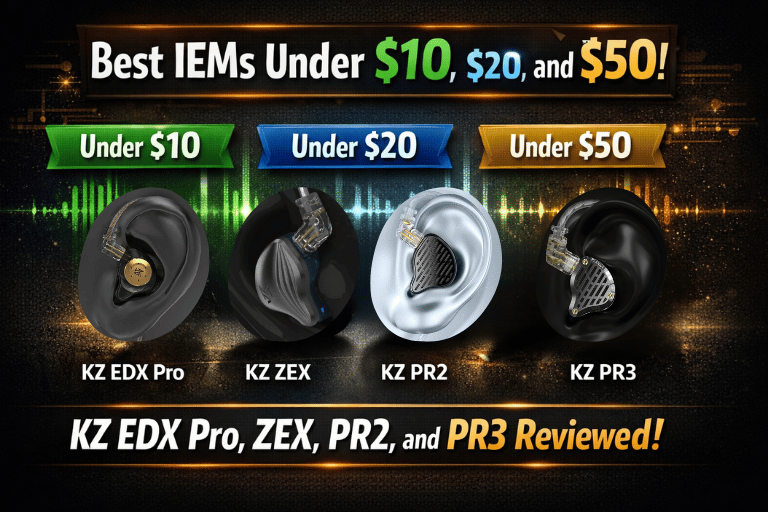
Best Budget IEMs: KZ EDX Pro, ZEX, PR2 and PR3 Reviewed
Meta Description: KZ EDX Pro, ZEX, PR2, PR3 — the best budget IEMs at every price point reviewed with official specs. Find out which KZ earphone is right for you.
Good Sound Doesn't Have to Cost a Fortune. KZ Proved It.
Here's a fact that would have seemed absurd ten years ago.
For under $20 — less than what most people spend on a single meal out — you can now own a pair of in-ear monitors with a hybrid driver configuration, a detachable cable, and genuine tuning that audio enthusiasts actually respect. For under $50, you can own a planar magnetic IEM with specs that dedicated audiophile products charged ten times more to deliver just a few years ago.
KZ — Knowledge Zenith — is the Chinese audio brand most responsible for this democratization. Founded in Dongguan, Guangdong, KZ has spent over a decade iterating through budget IEM designs with relentless speed, absorbing community feedback, and consistently delivering more performance per dollar than anyone else in the space.
Their catalog is enormous and genuinely confusing to navigate. This guide focuses on four models that represent the clearest, most well-rounded value at their respective price points — with every specification pulled directly from KZ's official product pages, so you know exactly what you're getting before you buy.
Quick Spec Comparison — Straight From KZ
Before the detail, the numbers. All specs sourced directly from kz-audio.com:
| Spec | KZ EDX Pro | KZ ZEX | KZ PR2 | KZ PR3 |
|---|---|---|---|---|
| Driver | 10mm Dual Magnetic Dynamic | 10mm Dynamic + 6.8mm Electrostatic | 13.2mm Planar Magnetic | 13.2mm Planar Magnetic |
| Impedance | 24Ω | 25Ω | 15±3Ω | 15±3Ω |
| Sensitivity | 112dB | 103dB | 94±3dB | 98±3dB |
| Frequency | 10Hz–20kHz | 20Hz–40kHz | 20Hz–40kHz | 20Hz–40kHz |
| Plug | 3.5mm | 3.5mm | 3.5mm | 3.5mm |
| Pin Type | 0.75mm 2-Pin | 0.75mm 2-Pin | 0.75mm 2-Pin | 0.75mm 2-Pin |
| Cable | 5N OFC flat cable | Silver-plated flat cable | Silver-plated cable | Silver-plated OFC cable |
| Cable Length | 125±5cm | 120±5cm | 120±5cm | 120±5c |
One important observation jumping out from these official numbers immediately: the EDX Pro's sensitivity of 112dB is notably higher than the planar models, which means it gets loud easily from any source. The PR2 and PR3's low impedance (15±3Ω) makes them easy to drive despite being planar, though their lower sensitivity means they need slightly more output than the EDX Pro.
KZ EDX Pro — The Best $10 IEM Available
Official price: ~$10–$12 USD Driver: 10mm Dual Magnetic Dynamic Impedance: 24Ω Sensitivity: 112dB Frequency range: 10Hz–20kHz Cable: 5N OFC oxygen-free copper flat cable, 125±5cm Pin: 0.75mm gold-plated 2-Pin
What KZ Says About It
KZ describes the EDX Pro as a "re-optimization" of their popular EDX, with four key upgrades: a cable upgrade to flat OFC, improved appearance with a resin-inlaid metal process, upgraded 2-Pin gold-plated interface, and a new special dual magnetic circuit dynamic unit. The dual magnetic circuit is KZ's headline feature here — they describe it as delivering "more natural low-frequency response and transparency high-frequency performance" compared to single magnet designs.
The 112dB sensitivity is the standout spec on paper. This is exceptionally high — it means the EDX Pro gets very loud from very little power. A phone headphone jack, a tablet, even a laptop audio output will drive this to listening volume without any strain. You will never have a "not loud enough" problem with the EDX Pro.
The frequency range of 10Hz–20kHz covers the standard human hearing range with the 10Hz low extension suggesting good sub-bass capability from the dynamic driver. The 20kHz upper limit is where most humans max out on hearing, meaning KZ isn't stretching the claim into ultrasonic territory the way the ZEX, PR2, and PR3 do with their 40kHz specs.
Build and Design
The EDX Pro uses KZ's resin-inlaid metal process — a legitimately premium construction method for the price, combining plastic and metal inlay for a result that looks and feels more expensive than $10. Available in Crystal, Cyan, and Black colorways. Over-ear cable routing with PU ear hooks reduces microphonics and improves stability.
The detachable 0.75mm 2-Pin cable is the most important practical feature: when the stock cable eventually degrades (and it will), you replace the cable, not the earphone. This upgradability is unusual at $10 and significantly extends the product's useful life.
Sound Character
The dual magnetic dynamic driver produces a sound character that KZ positions firmly in "live atmosphere" territory — energetic, impactful bass, smooth mids, and sufficient treble extension for a lively presentation. The 10Hz low extension provides genuine sub-bass presence.
The high sensitivity has an interesting implication: the EDX Pro will reveal hiss from noisy source components that lower-sensitivity IEMs mask. If your source has background hiss, the EDX Pro will surface it. From clean sources like most modern phones with Qualcomm or Apple DACs, this is not an issue.
Who It's For
The EDX Pro is the right starting point for anyone transitioning from stock earphones, anyone who needs a reliable daily driver at a replaceable price, and anyone who wants to understand what a properly tuned budget IEM actually sounds like before investing more. At 112dB sensitivity, it plays loudly from anything. At $10, losing or damaging it stings less than losing a £4 bus ticket.
The honest verdict: The best $10 IEM on the market. Full stop.
KZ ZEX — The $18 Hybrid That Opened a New Door
Official price: ~$18–$22 USD Driver: 10mm Dual Magnetic Dynamic + 6.8mm Low-Voltage Electrostatic Impedance: 25Ω Sensitivity: 103dB Frequency range: 20Hz–40kHz Cable: Double line silver-plated cable, 120±5cm Pin: 0.75mm gold-plated 2-Pin Passive noise reduction: 26dB
What KZ Says About It
KZ describes the ZEX as their "first dual-unit electrostatic and dynamic hybrid earphone" — a genuinely significant milestone in the budget IEM space when it launched. The configuration pairs a 10mm dual magnetic dynamic unit (handling mid and low frequencies) with a 6.8mm low-voltage electrostatic unit (handling high and ultra-high frequencies).
The 40kHz upper frequency extension — compared to the EDX Pro's 20kHz — reflects the electrostatic driver's superior high-frequency capability. KZ describes the electrostatic unit's 5-minute burn-in claim, noting it only needs "a little current to show strong performance potential" — meaning it works from phone playback without dedicated amplification.
The zinc alloy body construction is notable — genuine metal housing at $18 is uncommon. KZ describes this as "rare texture in products of the same level," and they're not wrong. The shell feels premium in hand.
The 26dB passive noise reduction spec is worth highlighting — it means the physical fit of the ZEX in the ear canal blocks a meaningful amount of ambient sound before any processing even occurs.
The Electrostatic Driver — What It Actually Is
KZ is transparent on their site about the technology: the ZEX uses an "electret low-voltage electrostatic unit," designed on the "reverse principle of an electret condenser microphone." This is distinct from true electrostatic drivers (which require high-voltage bias) but achieves similar high-frequency extension at a fraction of the cost and complexity. The micron-level diaphragm provides "high-density, clear layers" and "powerful detail reduction" according to KZ.
The practical result of this driver configuration is audible: the ZEX extends into frequency territory the EDX Pro doesn't reach, and the electrostatic driver's speed advantage in treble is real and perceptible in high-frequency detail.
Sensitivity Drop vs EDX Pro
One spec worth noting: the ZEX's 103dB sensitivity is 9dB lower than the EDX Pro's 112dB. A 9dB difference is audibly significant — the ZEX will feel noticeably quieter than the EDX Pro at the same volume setting. This is not a problem (103dB is still easily driven by phones) but something to be aware of when switching between the two models.
Sound Character
The hybrid configuration produces a more extended, more detailed sound than the EDX Pro — the dynamic unit maintains the bass body and mid presence, while the electrostatic driver adds high-frequency detail and air that single dynamic driver IEMs at this price rarely match. KZ describes a "deep and ethereal" quality to the sound, which the wide 20Hz–40kHz response supports.
Who It's For
Anyone who wants genuine hybrid technology at budget pricing. The ZEX is particularly strong for listeners who prioritize treble detail, vocal clarity, and an open, airy high-frequency presentation. The zinc alloy housing elevates the physical ownership experience above what the price suggests.
The honest verdict: The most interesting technology at its price. The step up from EDX Pro is real and worth the additional spend for detail-oriented listeners.
KZ PR2 — The Planar That Rewrote Budget Expectations
Official name: KZ x HBB PR2 Official price: ~$25–$35 USD Driver: 13.2mm Planar Magnetic (nanoscale silver-plated diaphragm, 7+7 N52 rubidium magnet array) Impedance: 15±3Ω Sensitivity: 94±3dB Frequency range: 20Hz–40kHz Cable: Silver-plated cable, 120±5cm Pin: 0.75mm gold-plated 2-Pin Shell: Alloy die-casting
What KZ Says About It
The PR2 is a collaboration between KZ and HBB (Hawaiian Bad Boy, a respected audio reviewer), and KZ describes it as a "real planar magnetic driver in-ear monitor" — emphasis on real, distinguishing it from the piezoelectric and pseudoplanar products that were flooding the market at the time.
The 13.2mm planar driver uses what KZ describes as a "7+7 N52 rubidium magnet array" — 14 total magnets in a double-sided arrangement. KZ's explanation of why this matters: stronger transient response, wider frequency response, and higher resolution. The N52 designation refers to the magnet grade — one of the strongest rare-earth magnet specifications available.
The nanoscale silver-plated diaphragm is manufactured to within 2-micron circuit accuracy, according to KZ — a precision requirement they describe as resulting in "faster vibration response, natural balance of three frequencies, and stronger transient resolution."
The Impedance and Sensitivity Situation
The PR2's specs require honest discussion. At 94±3dB sensitivity and 15±3Ω impedance, the PR2 sits in an interesting position. The low impedance (15Ω) means almost any device can technically drive it. The 94dB sensitivity, however, means you'll need your volume noticeably higher than the EDX Pro or ZEX to reach the same listening level.
Most modern phones will drive the PR2 adequately. A budget USB-C DAC dongle — the KZ AM01, for instance, at around $5 — removes any source-power concern entirely and is a worthwhile addition to the PR2 purchase.
The tuning method used on the PR2 is physical damping — KZ's site notes this explicitly in comparison with the PR3, which uses electronic filter tuning.
Build and Design
The alloy die-casting shell gives the PR2 a genuine premium feel. The semi-open exhaust design is described by KZ as controlling "excess clutter reflection" for a more natural sound. The larger shell required to house the 13.2mm planar driver means the PR2 is physically bigger than dynamic IEMs at the same price.
Sound Character
Planar magnetic sound is fundamentally different from dynamic driver sound. KZ describes the PR2 as offering "magnificent and detailed low-frequency performance" with a "smooth and natural tuning on each frequency band" that "adapts to various styles of music." The planar driver's absence of a voice coil structure is key — it eliminates the physical connection limitation that can blur dynamic driver bass and treble.
In practice, planar bass is tighter and more textured than dynamic bass. The trade-off is reduced physical slam. Planar treble is faster and more precise. These characteristics suit acoustic music, jazz, and vocal genres particularly well.
Who It's For
The PR2 is the gateway into planar sound for anyone who has heard the technology praised and wants to experience it without a substantial financial commitment. The HBB collaboration tuning leans more accessible than some audiophile planar IEMs while maintaining the genuine planar character.
The honest verdict: The best introduction to planar technology at any price point. Add a budget DAC dongle to fully maximize its potential.
KZ PR3 — The Refined Planar That Fixes Everything
Official price: ~$47 USD (KZ lists $46.99) Driver: 13.2mm Planar Magnetic (nano-level silver-plated membrane, 7+7 symmetrical magnetic circuit) Impedance: 15±3Ω Sensitivity: 98±3dB Frequency range: 20Hz–40kHz Cable: High-purity silver-plated OFC cable, 120±5cm Pin: 0.75mm gold-plated 2-Pin Shell: Alloy die-casting (mirror-like effect) Tuning: Electronic filter
What KZ Says About It
The PR3 is KZ's explicit response to everything the PR2 left room to improve. KZ's own site lays out the comparison directly:
The PR3 uses electronic filter tuning where the PR2 uses physical damping tuning. The PR3 has higher sensitivity than the PR2 (98±3dB vs 94±3dB). KZ states the PR3 "significantly improves over PR2 in the ultra-high-frequency range, offering a more expansive soundstage and superior resolution." And the PR3 is described as delivering "a more three-dimensional sound" overall.
The sensitivity improvement from 94dB to 98dB is a meaningful 4dB difference — the PR3 will play noticeably louder at the same volume setting, making source pairing considerably less demanding.
The Electronic Filter Advantage
The switch from physical damping (PR2) to electronic filter tuning (PR3) is the most technically significant difference between the models. Electronic filters allow more precise control of the frequency response than physical damping materials, enabling KZ to specifically address the ultra-high-frequency range that the PR2 left somewhat rough.
KZ notes the PR3 features an "independent tuning cavity" and "metal filter" in the driver assembly — components that contribute to the electronic filter tuning system and represent a more sophisticated approach to sound shaping than the PR2.
Build Quality Step-Up
KZ describes the PR3 as using "advanced processing equipment and manufacturing techniques" for the housing, with "lightweight alloy material" providing a "unique mirror-like effect." The stock cable is also upgraded to "high-purity silver-plated OFC" — a more premium cable than the PR2 ships with, and one of the better stock cables in the budget IEM space.
The memory foam ear tips included with the PR3 provide "excellent noise isolation" according to KZ — a comfort and isolation upgrade over the standard silicone tips of the lower-tier models.
Sound Character
The PR3 builds on everything the PR2 does and extends it. The electronic filter tuning produces a smoother, more refined frequency response — particularly in the ultra-high frequencies where the PR2 can occasionally feel slightly raw. The expanded soundstage KZ describes is audibly real: the PR3 has a more three-dimensional presentation with better spatial layering.
The improved sensitivity also changes the character slightly — the PR3 feels more immediate and energetic than the PR2 at matched volumes, which some listeners prefer and others find overly forward. For most music genres and most listeners, the PR3's tuning is more universally approachable than the PR2's.
Who It's For
The PR3 is for anyone who wants the best single KZ IEM purchase currently available — a planar earphone that works from any source without amplification concerns, suits a wide range of genres, and delivers genuine technical performance that competes well above its $47 price point.
The honest verdict: KZ's best IEM for most people at any budget. The $47 price feels unreasonably fair for what it delivers.
The Decision Guide: Which One Should You Buy?
Now that the actual specifications are on the table, the decision becomes cleaner.
Buy the KZ EDX Pro if: You want the absolute best sound-per-dollar below $15, you need something that works loudly from any source (112dB sensitivity covers everything), or you're buying your first decent earphone and want to start without financial risk. The 10Hz–20kHz frequency range covers everything you actually hear.
Buy the KZ ZEX if: You want genuine hybrid technology below $25, you prioritize treble detail and that airy extended high-frequency quality the electrostatic driver provides, or you want the premium zinc alloy build quality that makes the ZEX feel more expensive than it is. The 26dB passive noise reduction is also a real-world commuting benefit.
Buy the KZ PR2 if: You specifically want to experience planar sound, your listening is primarily acoustic, jazz, or vocal music where the PR2's characteristics shine, and you're prepared to add a budget DAC dongle to maximize its potential. The HBB tuning collaboration makes this the more accessible-sounding planar option.
Buy the KZ PR3 if: You want KZ's best overall IEM without compromise. The 98dB sensitivity means any phone drives it properly. The electronic filter tuning produces a smoother, more refined sound than the PR2. The improved cable means fewer aftermarket purchases. At $47, it delivers performance that earphones at $150–$200 were offering a few years ago.
One Accessory Worth Adding to Any of These
Every one of these IEMs ships with the 0.75mm 2-Pin connector standard. This means the same aftermarket cables fit all four models — so a single cable upgrade investment serves your entire KZ collection as it grows.
KZ makes their own upgrade cables (the M2 and T8 are current offerings on their site). Third-party 2-Pin cables from any audio accessories retailer work equally well. The immediate gains from a cable upgrade on budget IEMs are modest — better ergonomics and reduced microphonics are the primary practical benefits. But knowing the option exists makes every purchase feel less finite.
For the PR2 specifically, KZ's own AM01 Type-C DAC dongle is a natural companion — a $5 investment that eliminates any source-power concern and brings the PR2 fully into its performance zone.
Which KZ are you going with — or do you already run one of these and want to share how it sounds in real use? Drop it in the comments. And if you know someone still on stock earphones wondering what all the budget IEM fuss is about, send this their way.
