Over-Ear vs On-Ear vs In-Ear: Which Headphones Should You Buy?
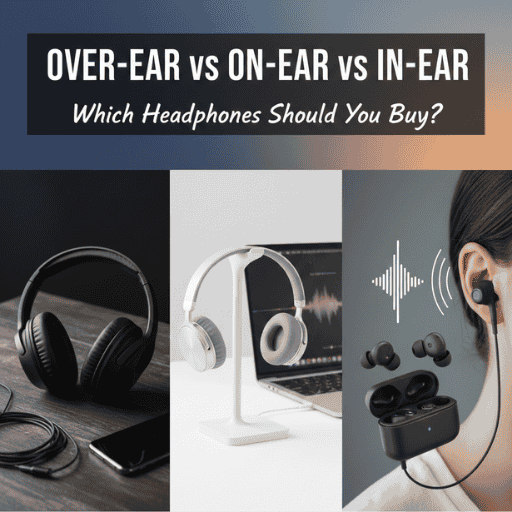
You're standing in a store (or scrolling through Amazon), staring at hundreds of headphone options. Some have massive cushions that engulf your ears. Others sit on top of your ears like earmuffs. Still others disappear entirely into your ear canal. They all promise "premium sound," "studio quality," and "immersive experience"—but they look completely different and vary in price from $20 to $400.
Which type should you actually buy? The answer isn't about which is "best" in absolute terms—it's about which design aligns with how, where, and why you'll use headphones. A design that's perfect for your daily commute might be terrible for gym workouts. Headphones ideal for home listening could be impractical for travel.
Let's break down the three fundamental headphone designs, understand their strengths and limitations, and help you choose the right type for your actual life—not some idealized version where you have different headphones for every situation.
The Three Types Explained
Over-Ear (Circumaural)
The cups completely surround your ears, with cushions resting on your head around the ear rather than on the ear itself. Think studio headphones, high-end consumer models, or gaming headsets.
How they work: The large cups create a seal around your entire ear, isolating it from the environment. The drivers (speakers) sit in the cups positioned in front of your ears without touching them.
Visual identifier: If the cushions are bigger than your ears and your ears sit inside the cups, they're over-ear.
On-Ear (Supra-aural)
The cups rest directly on your ears rather than around them. They're smaller and more compact than over-ear but larger than in-ear.
How they work: The cushions press against your outer ears, creating some passive noise isolation while remaining more portable than over-ear designs.
Visual identifier: If the cushions sit on top of your ears with noticeable pressure, they're on-ear.
In-Ear (Earbuds/IEMs)
These insert into your ear canal (in-ear monitors/IEMs) or sit in the outer ear bowl (earbuds). They're dramatically smaller and more portable than either over-ear or on-ear designs.
How they work: Earbuds rest in your outer ear. IEMs insert into the ear canal with silicone or foam tips creating a seal. Both types use tiny drivers positioned very close to your eardrum.
Visual identifier: If you insert them into or rest them in your ear with no headband, they're in-ear.
Over-Ear Headphones: The Comfort Champions
The Experience
Wearing over-ear headphones feels like having your ears in their own private acoustic chambers. When you put them on, they engulf your ears completely. Good models create a sense of being transported into the music—the outside world recedes, and you're surrounded by sound.
Sound Quality: Best Potential
Physics favors over-ear designs for sound quality:
Larger drivers (typically 40-50mm vs. 6-10mm for earbuds) can reproduce bass more accurately and handle complex music with less distortion. More driver surface area means better control of air movement, creating richer, more detailed sound.
Soundstage (the spatial quality of audio—how wide and dimensional it sounds) benefits from the physical distance between drivers and your ears. Over-ear headphones can create the illusion of sounds coming from different locations around you, approaching the experience of speakers in a room.
Bass response is superior because the sealed cups around your ears allow low frequencies to build properly. This is why studio monitors and audiophile headphones are almost always over-ear.
Comfort: All-Day Wearability (With Caveats)
When properly designed, over-ear headphones are the most comfortable for extended use:
No ear pressure: Your ears sit inside the cups without being touched, eliminating the pressure point fatigue that plagues on-ear designs.
Weight distribution: The headband distributes weight across the top of your head rather than pressing on your ears.
Heat consideration: Your ears are enclosed, which traps heat. Quality models use breathable materials, but you'll always be warmer than with on-ear or earbuds. Expect sweaty ears after 2-3 hours in warm environments.
Clamping force matters: Too loose and they slide around or fall off. Too tight and you get headaches. The sweet spot varies by head size and shape—what's perfect for one person causes pain for another.
Passive Noise Isolation: Excellent
The cups create a physical seal around your ears, blocking a significant amount of external noise even without active noise cancellation (ANC). Combined with ANC in premium models, over-ear headphones deliver the best isolation available.
Portability: The Achilles' Heel
This is where over-ear designs struggle:
Size and bulk: Even folding models take up significant bag space. They're not pocket-friendly, and you can't casually drape them around your neck comfortably for extended periods (they're heavy and the cups are bulky).
Weight: Ranging from 200-400 grams, they're substantially heavier than alternatives. Fine for stationary use, less ideal for active movement.
Not gym-friendly: The enclosed cups trap heat and moisture. Working out in over-ear headphones means sweaty ears and potentially sweaty cushions that need cleaning.
Best For:
- Home listening and dedicated music sessions
- Office/desk work where they stay in one place
- Long flights or train journeys where comfort matters more than portability
- Gaming (microphone integration is easier)
- Audiophiles prioritizing sound quality
- Anyone with ear sensitivity who can't tolerate in-ear or on-ear pressure
Not Ideal For:
- Gym, running, or active sports
- Hot, humid climates
- Minimalist travelers with limited bag space
- Quick, casual listening (they're overkill for 10-minute sessions)
Price Range: $50-$1,000+ Battery Life (wireless): 20-50+ hours typical Examples: Sony WH-1000XM5, Bose QuietComfort Ultra, Sennheiser HD 660S
On-Ear Headphones: The Compromise Design
The Experience
On-ear headphones try to split the difference between over-ear comfort/sound and earbud portability. They rest on your ears with varying degrees of pressure, creating a middle-ground experience that's both their strength and weakness.
Sound Quality: Good, With Limitations
On-ear sound quality falls between over-ear and in-ear:
Smaller drivers (typically 30-40mm) than over-ear models but larger than earbuds. This provides better bass response than earbuds but less fullness than over-ear.
Soundstage is narrower than over-ear because drivers sit closer to your ears with less acoustic space to work with. The music feels more "in your head" than surrounding you.
Bass response depends heavily on how well the cushions seal against your ears. An imperfect seal (common with on-ear) leaks bass frequencies, making the sound thinner. Glasses, earrings, or head shape can break the seal, compromising sound quality.
Tonal balance in good on-ear headphones is pleasant and balanced, but they rarely achieve the refinement of comparably-priced over-ear models.
Comfort: The Pressure Problem
This is on-ear's biggest compromise:
Ear pressure: The cushions press directly against your outer ears—the cartilage and soft tissue. After 1-3 hours, this creates discomfort ranging from mild soreness to genuine pain, depending on:
- Clamping force (how tightly they grip)
- Cushion material (memory foam is more forgiving than pleather)
- Your individual ear sensitivity
- Whether you wear glasses or earrings (creates pressure points)
Lighter weight than over-ear (typically 150-250g) feels better initially but doesn't compensate for the pressure discomfort over time.
Heat buildup is less than over-ear since your ears aren't completely enclosed, but you'll still feel warmth where cushions press against your ears.
The comfort paradox: On-ear headphones need enough clamping force to stay secure and create an acoustic seal, but this same force causes discomfort. Looser fit feels better initially but compromises sound quality and makes them slide around.
Passive Noise Isolation: Moderate
On-ear designs provide less isolation than over-ear because:
- Smaller cushions with less surface area to seal
- Seal quality varies based on head shape, glasses, movement
- More sound leakage both inward and outward
They block more noise than earbuds but significantly less than over-ear. This middle ground can actually be useful when you want some environmental awareness.
Portability: Better Than Over-Ear
This is on-ear's primary advantage over over-ear:
Smaller form factor: More compact cups and often folding designs make them easier to pack.
Lighter weight: Easier to carry and less neck strain if wearing them around your neck.
Still not pocket-friendly: They're smaller than over-ear but still need a bag. You're not casually sliding them into a jacket pocket.
Best For:
- Commuters who want better sound than earbuds without over-ear bulk
- Budget buyers (on-ear often costs less than comparable over-ear)
- Those who prioritize portability over maximum comfort
- Environments where some sound leakage and environmental awareness are acceptable
- People with smaller heads (often fit better than over-ear)
Not Ideal For:
- Extended listening sessions (3+ hours)
- Those with sensitive ears or who wear glasses
- Maximum sound quality seekers
- Gym/active use (they move around more than over-ear, less secure than in-ear)
- Anyone who experienced ear pain from on-ear before (it's a design limitation, not just that particular model)
Price Range: $30-$400 Battery Life (wireless): 15-40 hours typical Examples: Beats Solo 4, Sony WH-CH520, JBL Tune 510BT
In-Ear Headphones: The Portable Powerhouses
The Experience
In-ear headphones are the chameleons of the headphone world—they range from $5 gas station earbuds to $3,000 custom-molded audiophile IEMs. The experience varies dramatically based on quality and design.
Sound Quality: Surprisingly Capable
Modern in-ear headphones challenge the assumption that smaller means worse:
Tiny drivers (5-15mm) positioned extremely close to your eardrums can produce impressive sound. The proximity compensates for the smaller driver size—they don't need to push air across the distance over-ear drivers do.
Bass response depends entirely on the seal. A proper seal with quality IEMs can produce deep, powerful bass that rivals over-ear models. No seal = no bass, which is why fit is absolutely critical.
Soundstage is the main limitation. The drivers sit directly in your ear canal, creating a more intimate, "inside your head" presentation rather than the spacious sound of over-ear headphones. Some premium IEMs use multiple drivers per ear to expand soundstage, with varying success.
Detail and clarity can be exceptional in high-end IEMs. With the drivers so close to your eardrums and a good seal blocking external noise, you can hear subtle details that get lost in noisier over-ear presentations.
Comfort: Extremely Variable
In-ear comfort depends entirely on fit, which varies dramatically between individuals:
Perfect fit feels like nothing: When tips match your ear canal size and shape, good IEMs can be worn for hours without awareness. They essentially disappear.
Poor fit is torture: Wrong tip size, shape, or insertion depth causes pain within minutes. The ear canal is sensitive—even slight pressure creates discomfort.
Fit challenges:
- Finding the right tip size (small/medium/large often included)
- Tip material (silicone, foam, hybrid—each feels different)
- Insertion depth (shallow vs. deep)
- Ear canal shape variations (everyone's different)
Earbuds vs. IEMs: Traditional earbuds (Apple EarPods style) rest in the outer ear bowl without sealing the canal. They're more comfortable for some but provide less isolation and bass. IEMs insert into the canal for better sound but require proper fit.
Hygiene consideration: In-ear tips go into your ear canal, accumulating ear wax. Regular cleaning is essential, and tips need periodic replacement.
Passive Noise Isolation: Excellent (When Sealed)
A properly fitted IEM creates a near-perfect seal in your ear canal, blocking external noise as effectively as over-ear designs—sometimes better. This is why many professional musicians use IEMs for monitoring.
No seal = no isolation: This is the flip side. If tips don't fit properly, isolation is terrible and bass is non-existent.
Portability: Unmatched
This is where in-ear headphones dominate:
Pocket-friendly: True wireless earbuds and their charging case fit in any pocket. Even wired IEMs coil into minimal space.
Weightless: 5-15 grams total. You barely notice them.
Travel champions: No bag space required, easy to use on planes/trains/buses without the bulk of over-ear models.
Active use: Secure fit (when proper) makes them ideal for gym, running, cycling. They don't bounce around like over-ear or on-ear designs.
The Wireless Revolution: True Wireless Earbuds
The explosion of truly wireless earbuds (AirPods, Galaxy Buds, etc.) has transformed in-ear headphones:
Advantages:
- Complete freedom of movement (no wires whatsoever)
- Charging cases provide 20-40 total hours
- Advanced features (ANC, transparency modes, touch controls)
- Improving sound quality each generation
Disadvantages:
- Easy to lose (they're tiny and separate)
- Limited battery per earbud (4-8 hours typical)
- More expensive than equivalent wired models
- Bluetooth connection can be finicky
- Environmental concern (batteries, e-waste)
Best For:
- Commuters and travelers prioritizing portability
- Gym, running, cycling, active lifestyles
- Those who want headphones they can always carry
- People who prefer minimal feeling of wearing headphones
- Podcast/audiobook listeners (sound quality demands are lower)
- Quick listening sessions throughout the day
Not Ideal For:
- Those with ear canal sensitivity or fit issues
- Critical music listening prioritizing soundstage
- Anyone who consistently loses small items
- Extended single-session use (ear fatigue is real for some people)
- Those bothered by feeling of ear canal insertion
Price Range: $10-$3,000+ (widest range of any type) Battery Life (wireless): 4-8 hours per charge, 20-40 hours with case Examples: Apple AirPods Pro, Sony WF-1000XM5, budget wired IEMs
The Hybrid Solution: Own Multiple Types
Here's the truth: no single headphone type is perfect for every situation. Many people benefit from owning two types:
Common Combinations:
Over-ear + True Wireless Earbuds: Over-ear for home/office/travel (quality and comfort), earbuds for portability and gym.
On-ear + Wired Earbuds: Budget-friendly combo providing decent home listening (on-ear) and portable backup (wired earbuds).
Premium IEMs + Budget Over-ear: Commute/portable with IEMs, home listening with comfortable over-ear.
Investment Strategy: Rather than spending $300 on one pair trying to do everything, consider $150 over-ear + $150 earbuds, each optimized for their specific use case.
The Decision Framework: How to Choose
Ask yourself these questions:
1. Where will you primarily use these headphones?
- Home/office → Over-ear
- Commute/travel → On-ear or in-ear
- Gym/running → In-ear only
- Multiple locations → Consider two types
2. How long are typical listening sessions?
- 4+ hours regularly → Over-ear (comfort essential)
- 1-3 hours → On-ear acceptable
- Sporadic throughout day → In-ear (portability matters)
3. How important is portability?
- Always carrying in bag/pocket → In-ear mandatory
- Bag space available → On-ear acceptable
- Stays in one place → Over-ear fine
4. What's your sound quality priority?
- Critical listening, soundstage matters → Over-ear
- Balanced, good-enough sound → Any type in quality tier
- Convenience over perfection → In-ear
5. Do you wear glasses or have ear sensitivity?
- Glasses → Avoid on-ear (pressure points), over-ear or in-ear better
- Ear canal sensitivity → Avoid in-ear, choose over-ear
- Pressure headaches → Avoid on-ear, choose over-ear or in-ear
6. What's your budget?
- Under $50 → In-ear or budget on-ear
- $50-150 → On-ear or budget over-ear
- $150-400 → Quality over-ear or premium in-ear
- $400+ → Premium over-ear or audiophile IEMs
7. Active noise cancellation important?
- Essential (frequent flyer, noisy commute) → Over-ear or premium in-ear with ANC
- Nice to have → On-ear or mid-tier in-ear
- Don't care → Any type, save money
Common Mistakes to Avoid
Mistake 1: Buying Over-Ear for Gym They're hot, heavy, and trap sweat. Get in-ear for active use.
Mistake 2: Expecting On-Ear to Match Over-Ear Comfort Physics and design make this impossible. If comfort is priority, spend more on over-ear rather than buying expensive on-ear.
Mistake 3: Assuming Bigger Always Sounds Better Premium in-ear monitors can sound better than budget over-ear. Size enables potential, but quality determines reality.
Mistake 4: Ignoring Fit for In-Ear The most expensive IEMs sound terrible if tips don't fit properly. Ensure you can return/exchange if fit is wrong.
Mistake 5: Buying One Pair for Everything The "do-everything" headphone is usually mediocre at everything. Consider your primary use case.
The Bottom Line
Over-ear headphones deliver the best sound quality potential and all-day comfort but sacrifice portability. Choose these if listening sessions are long, quality matters, and you don't need to carry them constantly.
On-ear headphones compromise between over-ear and in-ear but don't excel at either's strengths. Choose these only if portability matters more than comfort but sound quality needs to exceed basic earbuds, and budget is limited.
In-ear headphones prioritize portability and active use, with sound quality ranging from terrible to excellent based on price and fit. Choose these if you need headphones you can always carry, use during activity, or want to minimize awareness of wearing headphones.
There's no universal "best"—only what's best for your specific life, priorities, and budget. Be honest about how you'll actually use headphones, not how you imagine you might, and choose accordingly.
Your ears (and your daily routine) will thank you.
